Category Archives: Books

What I’m reading, book recommendations, and thoughts on the written word.

Review: From Plato to Post-modernism

51GBGRne7aL._AA300_.jpgOne thing I’m going to try this year is to write a review of every book I get a chance to read. It’s March already so I’m a bit behind and the next few will be out of order, but this seems like as good a place to start as any.

One new thing I’ve been doing this year is listening to audiobooks with an Audible account, so this first book review is actually an audiobook. Great Courses is actually an old school thing where you could order college lectures on tape. From the references throughout the lectures I listened to, my guess is that the recordings are from the 90s. This one is called From Plato to Post-modernism: Understanding the Essence of Literature and the Role of the Author ($25 on Audible, $9.99 on cassette tape 🙃).

I really enjoyed this series. Some of the early lectures covering Aristotle, Longinus, and Sidney’s “Apology for Poetry” were quite brilliant. Later ones from Foucault and Derrida on were weaker and harder to follow, which I think is a function of both the material, which can be dense when it starts getting into Modernism, the length, fixed at 30 minutes, and the lecturer, Louis Markos. Markos teaches at Houston Baptist University and his asides can sometimes be a little traditional, but in an adorable grandpa way. He has an infectious enthusiasm that makes even the slower chapters on Kant and Schiller bearable, but his love of and fluency in the earlier classics is really a pleasure.

It made me curious to look into more online lectures and sometime this year I’m going to check out this one on Value Theory at Khan academy. I also picked up a used copy of Critical Theory Since Plato which had the original text for many things discussed in the lecture, so was a great reference point when I was at home in Houston, where I end up listening to most audio content since it’s a driving town.

On the recommendation of my friend Timothy Young I checked out the book The Martian: A Novel by Andy Weir. Think of it like Shackleton’s Voyage (a great recommendation from Toni) but on Mars. I really enjoyed the book, and if you like geeky, science-filled novels you will too.  One thing about the publishing I thought was really cool, as the Wikipedia puts it:

Having been rebuffed by literary agents when trying to get prior books published, Weir decided to put the book online in serial format one chapter at a time for free at his website. At the request of fans he made an Amazon Kindle version available through Amazon.com at 99 cents (the minimum he could set the price). The Kindle edition rose to the top of Amazon’s list of best-selling science-fiction titles, where it sold 35,000 copies in three months, more than had previously downloaded it for free. This garnered the attention of publishers: Podium Publishing, an audiobook publisher, signed for the audiobook rights in January 2013. Weir sold the print rights to Crown in March 2013 for six figures.

I was hoping it was on a WordPress blog, but it appears to be more of a static HTML site (his official site is WP-powered) and includes some awesome short vignettes like Meeting Sarah.

Nathan Myhrvold and Modernist Cuisine

Nathan Myhrvold, an interesting character I’ve following for a few years now, has been in the news lately for his co-authorship with Maxime Bilet and Chris Young of the new food bible Modernist Cuisine: The Art and Science of Cooking (Amazon link). (Peep that beautiful, 100% WordPress-powered site.) I pre-ordered it forever ago, a fact that may surprise friends who know how little I cook, but I do love food and I was as interested in the pictures and the result of a detail-oriented and science-driven obsession with quality that goes all the way down to the stochastic printing process as the articles/recipes .

The books are, in a word, stunning. I’m probably a lifetime away from attempting a 30-hour burger, but last night I did try a sous-vide approach to a New York sirloin and it turned out amazing. (Though that photo probably won’t be in a future edition of Modernist Cuisine.) The fact I can barely scramble eggs but made a super-good steak might portend the apocalypse. I think sous-vide cooking is something that will appeal a lot to engineers or analytically minded folks because it’s a controlled process with predictable outcomes.

Here are some interesting links and videos I’d recommend around Modernist Cuisine, sous-vide cooking, and Nathan Myhrvold himself:

If you made it this far, two bonuses:

At the EG Conference in 2007 I interviewed Nathan Myhrvold about the Dvorak keyboard layout, which I’ve used about 11 years now, and here’s that video:

Second, Mark Pearson of Pear Press (also associated with one of my other favorite authors John Medina) recommends the Pizza Nepoletana technique in volume 2 page 26 as an accessible dish, and the tip on decanting wine in a blender.

Thanks to many friends for the links, and also for listening to me blather on about this for the past week or two. You may also be subject to more experiments in the future.

I’m just going to keep updating this post with more links:

John Medina in SF Tomorrow

John Medina, the author of one of my favorite books Brain Rules, is going to be at Automattic’s office tomorrow (Tuesday the 2nd) at 5 PM to have some after-work drinks and give a short talk. We’ve reserved some seats for the SF WordPress community to come by, and we even have free copies of his books for the first 30 people to show up. RSVP is required, so register here. Hope to see a few of you guys there!

Twenty-Five

Today I am a quarter of a century old. To be honest I never thought I would be this old, it was a number beyond where I could imagine or visualize but the last few years have just gone by in a blur and here I am, 25 years young and finally able to rent a car without paying an age penalty.

Following up from the open source resolutions, here’s what I’m going to aim for this year in no particular order:

  • Learn a language where WP has a big impact (probably Spanish).
  • Take more videos, post at least 2 a month.
  • Post 10,000 photos in 2009.
  • Post at least one book a month I’ve enjoyed.
  • Don’t try to do everything myself.
  • Redesign Ma.tt! (And get back up in the search engine rankings for “Matt” on Google.)
  • Post more personal stuff. (Like this.)
  • Spend more time working with and coaching other young entrepreneurs and startups.
  • Donate to 5 Open Source projects that touch my life daily.
  • Learn to make/prepare one food item a month.
  • Launch, launch, launch! (Real artists ship.)
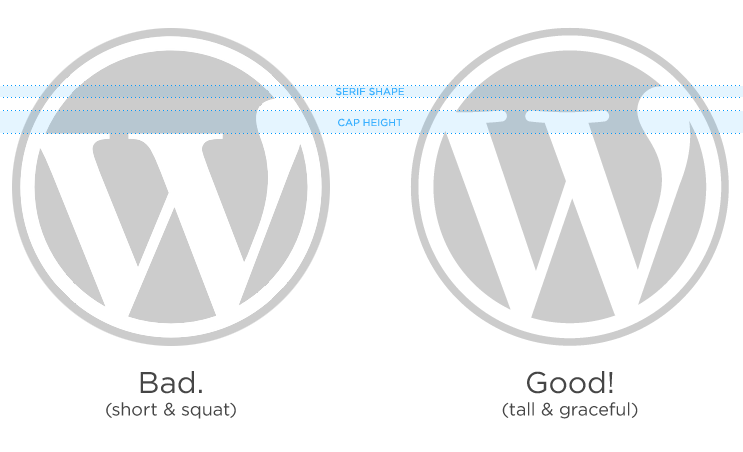
  • Get people to capitalize WordPress correctly, and stop using the fake mis-proportioned W. 🙂 (Here are some correct ones.)
  • Print my favorite picture of another person every month and send it to that person in a picture frame.
  • Reinstate WordPress Wednesdays and make it easier to do an amazing photoblog with WP.

(Hat tip to Boris Mann, Benji, Niall Kennedy, John Roberts, Titanas, Network Geek, Avinash, Kirb, Julie, Mark Jaquith, and Kabatology for the resolutions.)

This is the seventh year I’ve blogged my birthday: 19, 20, 21, 22, and 23, and 24. If you had asked me 7 years ago where I would be today I couldn’t have imagined all of the amazing things that have happened, the incredible people I’ve met, and the communities that I’ve become a part of. Thank you. Here’s to the next 25.

All birthday posts: 19, 20, 21, 22, 23, 24, 25, 26, 27, 28, 29, 30, 31, 32, 33, 34, 35, 36, 37, 38, 39, 40, 41, 42.

Facebook Fan

If you’re a Facebook user and a reader of this blog you can now add me to your Facebook. The “pages” feature of Facebook is neat because before I was conflicted because I wanted to add everyone I met at various conferences or WordPress users as a “friend” but then news feeds and such basically become unusable. I’m going to try to use it like a mailing list sending out some travel and life updates, like if I’m going to be in a particular country. Sign up here. 🙂

Infrastructure as Competitive Advantage

There’s an interesting post at GigaOM: Web 2.0, Please Meet Your Host, the Internet. It’s a good read, though could be shorter, but a few things struck me after reading it. I don’t disagree with him per se, I just think the emphasis is on the wrong thing. (Probably for effect.)

Infrastructure can be a competitive advantage today — the speed and reliability of WordPress.com has certainly put us in a favorable light with users, especially large customers — but that’s going to disappear over time. We’re very much at version 0.1 of things like Amazon’s web services and App Engine, but it’s not hard to read the writing on the wall and understand that level of abstraction is going to be the future foundation of web applications. I’m not counting on infrastructure to be a long-term competitive advantage for Automattic.

If you have a few minutes it’s worth reading On Grids, the Ambitions of Amazon and Joyent which has the real definition of a grid and Sunshine, which is worth it for the extended analogies to Greek mythology. (Both end in ads for Joyent.) Also check out Early notes on GoogleApps, Dave Winer groks where this has to go.

Second, Allan describes a case of a DDOS attack hurting a friend’s startup who had very little information about how to stop it:

Unfortunately, the poor site performance was not missed by the blogosphere. The application has suffered from a stream of bad publicity; it’s also missed a major window of opportunity for user adoption, which has sloped significantly downward since the DDOS attack and shows no sign of recovering.

We can all name startups or sites that aren’t particularly known for their performance, but that flourished in spite of it. Twitter and MySpace comes to mind. If we dug a little deeper we could also find thousands of startups who were prepared for the world to show up to their door, and it never did. Building something people want is much harder than scaling it. (In most cases.) If you solve the what-people-want problem, they’ll use you no matter how bad your interface is, how slow your site is, just give them somewhere worth waiting for. I would suspect the friend here isn’t seeing their usage decline because on their Techcrunch day the site wasn’t responsive, it’s that they’re probably still in the before market fit stage.

Third, I am a huge believer in the importance of performance, but most people forget that on the web 80-95% of performance is on the front end not the page generation time. (I realize I’m saying this on a site with a 140kb header graphic. :)) Yahoo has fantastic resources on this. When a website “pops” it probably has very little to do with their underlying server infrastructure and a lot to do with the perceived performance largely driven by how it’s coded at the HTML, CSS, and Javascript level. This, incidentally, is one of the reasons Google Gears is going to change the web as we know it today – LocalServer will obsolete CDNs as we know them. (Look for this in WordPress soonish.)

Finally, for the next few years before we have true utility computing, there are some great “hardware as a service” providers like Layered Tech and Server Beach that essentially handle everything from the power to the network to hardware, and let you take over from the operating system up. This is what we use for WordPress.com, Akismet, WordPress.org, and it’s great. It’s allowed us to focus on what matters — our software and service. You still need a pro like Allan describes to handle things at the OS level (most performance problems I see are badly configured servers, not hardware limitations) but leave networking and hardware to people with economies of scale. This comment nails it.

Update: I’m in a video Rod Boothby did asking What is Cloud Computing, good timing.