Life updates, reflections, and everything that doesn’t fit neatly into another category.
Brett Martin has an excellent longread in GQ, Houston Is the New Capital Of Southern Cool. I moved to San Francisco when I was 20, I hadn’t ever even been old enough to drink in Houston, but when I returned in my late twenties and really made it my home I was blown away at how much the city had changed in the time I had been away. Or maybe I just grew up enough to appreciate it. Regardless, Brett captures the verve and paradoxes of the city well.
This week I spoke with TechCrunch about one facet of distributed work that differs from physical offices — the idea of “office politics.” I can’t claim that distributed work will solve everyone’s personal differences, but I do think it relieves some of the pressures that might come from forced cohabitation and environments that are prone to interruption. They also have some great points from Jason Fried and and Wade Foster.
Yes, it is a press, certainly, but a press from which shall soon flow in inexhaustible streams the most abundant and most marvelous liquor that has ever flowed to relieve the thirst of man! [….] A spring of pure truth shall flow from it! Like a new star, it shall scatter the darkness of ignorance, and cause a light heretofore unknown to shine among men.
A master in the art of living draws no sharp distinction between his work and his play; his labor and his leisure; his mind and his body; his education and his recreation. He hardly knows which is which. He simply pursues his vision of excellence through whatever he is doing, and leaves others to determine whether he is working or playing. To himself, he always appears to be doing both.
Lawrence Pearsall Jacks in Education through Recreation, 1932
I’m a huge fan of Mailchimp, but dang does the service get abused by folks aggressively opting you into mailing lists. I have a very early, very generic Gmail address that people put as a filler address into every possible service and it gets tens of thousands of list and spam mails. A good trick to find and unsubscribe from all the Mailchimp lists you’re on is to search for mcsv.net and then select all, report as spam, and unsubscribe. Gmail doesn’t deal well when the unsubscribe list is taller than your screen, so you may need to hit command + - a few times to make it all fit. Also according to this post, “you can also get in touch with our compliance team directly at compliance@mailchimp.com with the email address you would like to remove from all lists and they will be happy to further assist you there as well.” I will try that as well.
Dean Allen, a web pioneer and good man, has passed away. I’ve been processing the news for a few days and still don’t know where to begin. Dean was a writer, who wrote the software he wrote on. His websites were crafted, designed, and typeset so well you would have visited them even if they were filled with Lorem Ipsum, and paired with his writing you were drawn into an impossibly rich world. His blog was called Textism, and among many other things it introduced me to the art of typography.
Later, he created Textpattern, without which WordPress wouldn’t exist. Later, he created Textdrive with Jason Hoffman, without which WordPress wouldn’t have found an early business model or had a home on the web. He brought a care and craft to everything he touched that inspires me to this day. As John Gruber said, “Dean strove for perfection and often achieved it.” (Aside: Making typography better on the web led John Gruber to release Smarty Pants, Dean a tool called Textile, and myself something called Texturize all within a few months of each other; John continued his work and created Markdown, I put Texturize into WP, and Dean released Textile in Textpattern.)
Years later, we became friends and shared many trips, walks, drinks, and meals together, often with Hanni and Om. (When we overlapped in Vancouver he immediately texted “I’ll show you some butt-kicking food and drink.”) His zest for life was matched with an encyclopedic knowledge of culture and voracious reading (and later podcast listening) habits. I learned so much in our time together, a web inspiration who turned for me into a real-life mensch. He was endlessly generous with his time and counsel in design, prose, and fashion. I learned the impossibly clever sentences he wrote, that you assumed were the product of a small writing crew or at least a few revisions, came annoyingly easily to him, an extension of how he actually thought and wrote and the culmination of a lifetime of telling stories and connecting to the human psyche.
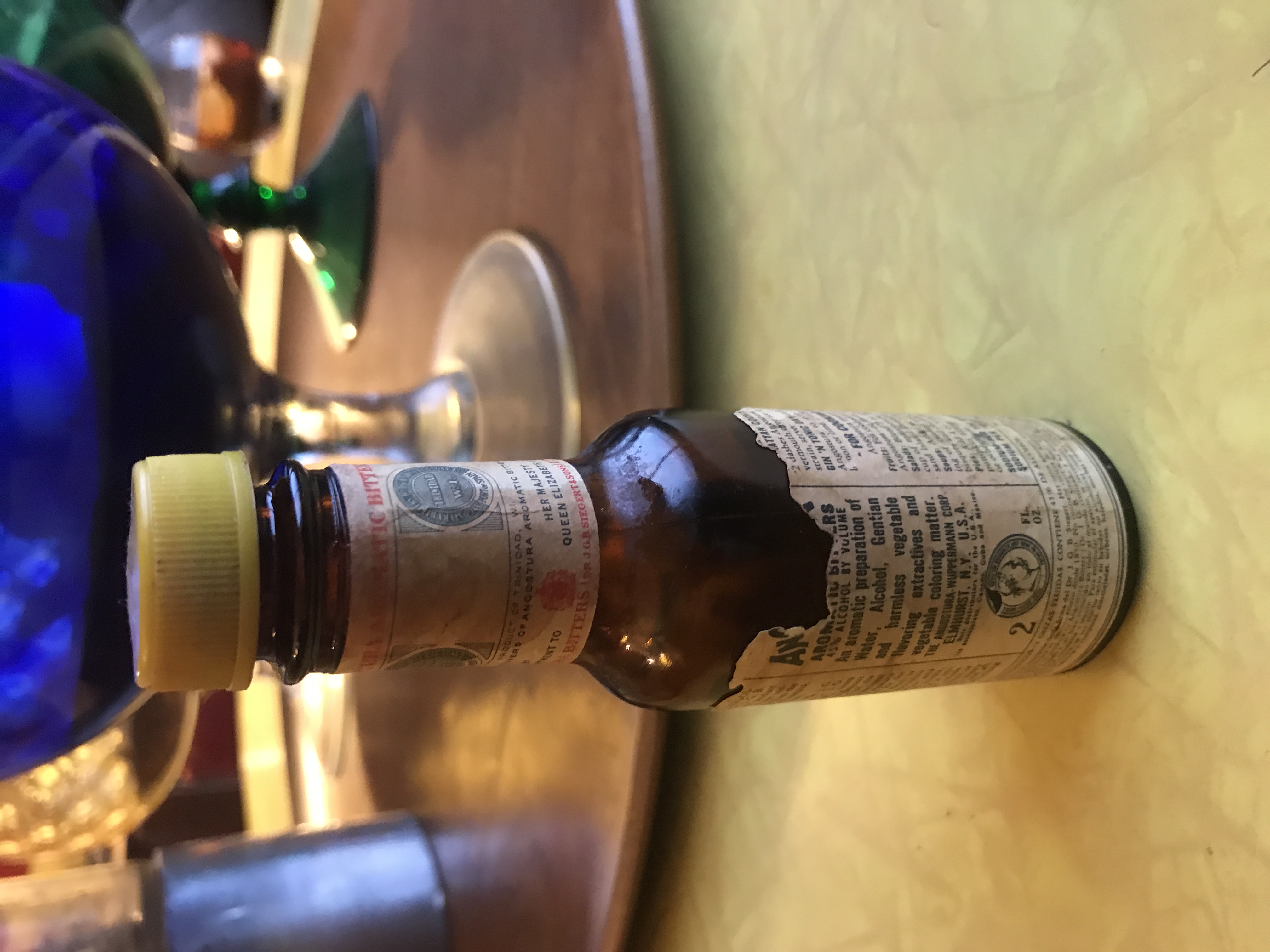
Dean, who (of course) was also a great photographer, didn’t love having his own photo taken but would occasionally tolerate me when I pointed a camera at him and Om has a number of the photos on his post. There’s one that haunts me: before getting BBQ we were at his friend’s apartment in Vancouver, listening to Mingus and enjoying hand-crafted old fashioneds with antique bitters, and despite the rain we went on the roof to see the art that was visible from there. He obliged to a photo this time though and we took photos of each other individually in front of a sign that said “EVERYTHING IS GOING TO BE ALRIGHT.” It wasn’t, but it’s what I imagine Dean would say right now if he could.
I am very thankful and grateful to have made it through the past year, which was a really special one personally and professionally. I learned to open myself up more to relationships, continued aspiring to be clear and direct with yellow arrows, and worked alongside some incredible people to tackle the biggest and hardest problems, whether it was getting plugin and theme support on WP.com or the start and growth of Gutenberg.
I read a lot more books, traveled 337k miles between 91 cities, spent more time in Texas, kept my health in a good balance with weight training, running, and a better diet including several months of 16/8 intermittent fasting, while still getting in some excellent meals with friends and loved ones (up to 58% of top 50 list). As I’m solidly in my mid-thirties now, and I want to continue to live by: all things in moderation. I consider what I do with WordPress and Automattic my life’s work, and hope to continue it as long as I’m useful. Some days I pinch myself.
Thank you to all of you on this journey with me. I am imperfect but trying my darndest, and I’m lucky to have friends and colleagues doing the same.
Politico has a lovely story on the history and present of the NORAD Santa Tracker, which started because a 1955 Sears department store ad had “a digit wrong — and was instead the direct line into the secret military nerve center in Colorado Springs, Colo., where the Pentagon was on the lookout to prevent nuclear war.”
[Gauguin] was penniless and adrift, trying to paint his way through the devastations of his dying marriage, his rejection by the cliques of the Parisian art establishment, and the precarity of his friendship with Vincent van Gogh, who shortly before Christmas had assaulted him with a razor and, after Gauguin’s departure that evening, used the same blade to cut off his own ear […] Despite the promises of the name, it can be a challenge to find actual olives at Olive Garden.
Movable type was about books, but it wasn’t just about books. Ideas spread. Literacy spiked. The elite monopoly on education and government started to crack. Luther’s 95 Theses were printed on a press, rocking Europe, and he issued “broadsheets.” Broadsheets became newspapers; newspapers enabled democracy. The printing press ushered in social, political, and economic sea changes. Gutenberg changed everything.
WordPress has always been about websites, but it’s not just about websites. It’s about freedom, about possibility, and about carving out your own livelihood, whether it’s by making a living through your site or by working in the WordPress ecosystem itself. We’re democratizing publishing — and democratizing work — for everyone, regardless of language, ability, or economic wherewithal.
WordPress’s growth is impressive (28.5% and counting) but it’s not limitless — at least not in its current state. We have challenges (user frustrations with publishing and customizing, competition from site builders like Squarespace and Wix) and opportunities (the 157 million small businesses without sites, aka the next big market we should be serving). It’s time for WordPress’ next big thing, the thing that helps us deal with our challenges and opportunities. The thing that changes the world.
When Johannes Gutenberg’s press came out, people mostly used it to print the same religious text monks had been copying. It wasn’t until ten or fifteen years later that people started innovating and trying their hands at new kinds of writing, and the wheels of change started to spin faster. Now it’s WordPress’ turn to do the same. Gutenberg meets our challenges and opportunities head on while simultaneously benefitting everyone who makes a living working in the WP ecosystem. It’s about a lot more than just blocks. Our Gutenberg moves every part of the WordPress ecosystem forward:
Developers and agencies will be able to create interactive templates that clients can easily update without breaking things or dealing with custom post types: Imagine a custom “employee” block that you can add to an About page that includes a picture, name, and bio. They’ll be able to replace most meta boxes, and they’ll get a chance to update old code or clients to work in this new paradigm.
Plugin developers will be able to completely integrate into every part of WordPress, including posts, pages, custom post types, and sidebars without having to hack TinyMCE or squeeze their entire feature behind a toolbar button. Today, every plugin that extends WordPress does it in a different way; Gutenberg’s blocks provide a single, easy-to-learn entry point for an incredible variety of extensions. Some folks have already begun to port their plugins over, and are finding that they’re easier to build and have a much improved UI. I’m looking forward to highlighting those stories as we get further along and more people write about them.
Theme developers won’t need to bundle tons of plugins or create their own page builders. There’ll be a standard, portable way to create rich layouts for posts and guide people through setup right in the interface, no 20-step tutorials or long videos needed. Every theme will be able to compete with multi-functional premium themes without locking users into a single theme or compromising their experience.
Core developers will be able to work in modern technologies and not worry about 15 years of backwards compatibility. We’ll be able to simplify how menus, widgets, and the editor work to use a common set of code and concepts. The interface will be instantly responsive.
Web hosts will have better signup rates, as Gutenberg opens up WordPress to an entirely new set of people for whom WordPress was too complex and hard to set up before. (Remember our goal: to democratize publishing.) Their churn rates will go down: they’ll stop bleeding customers to Wix, Weebly, and Squarespace, and fewer people will abandon their sites because it was too hard to make things look they way they wanted.
Users will finally be able to build the sites they see in their imaginations. They’ll be able to do things on mobile they’ve never been able to before. They’ll never have to see a shortcode again. Text pasted from Word will get cleaned up and converted to blocks automatically and instantly. (I pasted the first version of this post from Google Docs and it worked great. 👌) They’ll start manipulating their sites in ways that would have taken a developer. They’ll be able to move from blogging to using WordPress as a CMS without missing a beat. Editing posts will just work; they’ll write more. They’ll learn blocks once, and then be able to instantly use and understand 90%+ of plugins.
I could go on about how photographers will be able to create rich galleries, parallax images, and better portfolios, or how poets will finally be able to preserve whitespace as they write, but you get the idea. It’s big. It moves the WordPress ecosystem forward, but it also moves the whole web forward.
Which is scary! Because change always is, and this is a big one. But a scary thing is usually a thing that leads to growth, if you can push through it. Ten years ago, agencies and developers worried that software like WordPress would ruin their business because clients wouldn’t need help updating their sites any more, and would maybe even just start building their own sites. But their worse fears didn’t come true — instead, it created new opportunities for everyone.
(People were worried when the printing press was invented, too. A Swiss biologist warned against the “confusing and harmful abundance of books,” but I’d say it all worked out in the end.)
This is not to say that nothing will go sideways with Gutenberg, or that people’s concerns about it are unfounded. Making something people want is really hard to do and easy to mess up — we definitely have in the past. I share many of the concerns or worries with today’s version of Gutenberg, and we’re working to mitigate them. Gutenberg will ship with WordPress 5.0, but the release will come out when Gutenberg is ready, not vice versa. We still have target dates to help us think about scope and plan for all the supporting documentation, translation, and marketing efforts, but we’re not going to release anything until Gutenberg is something the team working on it agrees is ready.
And as we work, we’re listening: feedback on core and feature plugins gets read, heard, and considered. Every review of Gutenberg, even the rude ones, has a response. Seven months of vigorous and public debate, chats, tickets, and code changesets brought us to where we are today, and there will be a fair amount more before we can present the Gutenberg vision in a mostly-complete state. I welcome it; apathy would worry me a lot more than disagreement or controversy.
Creating great software will never make every person happy. We’re not creating The Perfect Product, we’re choosing a path between many good options, weighing all of the inevitable trade-offs that come from a change, listening, shipping, and then doing it all over again. Iterating. My life’s work is improving WordPress. I firmly believe that Gutenberg is the direction that will provide the most benefit to the maximum number of people while being totally in line with core WordPress’s philosophies and commitment to user freedom. So keep giving us your feedback, and let’s push through the fear together. It’s worth a little discomfort to change the world.
Yes, it is a press, certainly, but a press from which shall flow in inexhaustible streams, the most abundant and most marvelous liquor that has ever flowed to relieve the thirst of men.
Johannes Gutenberg
Thank you to the WP Tavern conversation that helped me write down many of these ideas, and Michelle Weber. This post started in Google Docs then revised in Gutenberg 0.9.
The Economist writes about who’s wrong when flyers end up in the wrong cities. This has actually happened to me! Probably 7-8 years ago, it was an Air Canada flight from New York to Montreal, and I accidentally boarded the one to Toronto. The mistake was realized when we were on the ground, but had pulled away from gate. Being Canadian, they were exceedingly nice and asked me to stay on the flight but they’d find me one from Toronto to Montreal after I landed.
The bestselling novel of 1961 was Allen Drury’s Advise and Consent. Millions of people read this 690-page political novel. In 2016, the big sellers were coloring books.
Fifteen years ago, cable channels like TLC (the “L” stood for Learning), Bravo and the History Channel (the “History” stood for History) promised to add texture and information to the blighted TV landscape. Now these networks run shows about marrying people based on how well they kiss.
One of the things that surprised me most about when my Dad was sick last year was that while he was in the hospital over about 5 weeks he lost any interest in music, TV, movies, anything on a screen. Music was particularly surprising given that he had music on at his desk pretty much all the time, and really enjoyed loading a new CD or record into the media library he had set up at home. One of the songs I remember playing for him was from a band, Manhattan Transfer, that we used to listen to a lot when I was younger and just learning about jazz, I chose Tuxedo Junction because it might cheer him up.
I remember him smiling faintly. (I wish I had played him more music. I wish I had recorded more of his stories, ideally before he got sick. I wish I had figured out how to navigate the hospital and health care system better.)
What I didn’t anticipate was how after his death there would be aftershocks of grief that would hit me over and over again, especially while driving or in a plane. I went from crying maybe three times in the past decade to breaking down at the end of a company town hall, when talking to family, when my Mom found out about the anniversary present my Dad had been looking at, and with any number of songs that unexpectedly took on a new meaning.
John Mayer’s Stop This Train is a song I’ve probably heard a hundred times since it came out in 2006, but all of sudden these words meant something completely different:
So scared of getting older
I’m only good at being young
So I play the numbers game
To find a way to say that life has just begun
Had a talk with my old man
Said, “Help me understand”
He said, “Turn sixty-eight
You’ll renegotiate”
I almost had to pull the car over: he was sixty-eight. What I would give for just one more conversation with him like the one the day before he passed. I wish I had written more down, recorded more of his stories, learned more about his journey.
As the year has passed, the surprise crying is much less common even when one of these songs comes on the radio. Usually when I think of my father it’s with a smile. I’ve even had a few treasured dreams where we’ve been able to talk, nothing that made much sense (it was a dream) but I remember waking up with an overwhelming feeling of enveloping love. While the “new normal” is different, I can’t say it’s better — he’s still gone.
There’s a new “World’s 50 Best Restaurants” list out! I follow the list and try to check out restaurants on it when I’m in the area, and as of last month had made it to 28 out of 50 of last year’s list. It’s a goal but in a rolling, gentle fashion: as the list changes every year I’ll probably never make it to 100%, but I enjoy exploring the highlighted folks and I’ve never had a bad meal at one. I was able to make it to Eleven Madison last month and predicted they might take the top spot, which they did in a well-deserved win. As with any award, there are lots of detractors, but Scott Vogel at Houstonia has a great essay on Why the World’s 50 Best Restaurants List Matters, which encapsulates nicely what the list represents to me.